One of my first jobs after graduating from art school was as a sketch artist at a video game advertising firm. I was the only illustrator on staff, surrounded by graphic designers and production artists with fun personalities. It was a good environment in the way early jobs sometimes are: chaotic, full of energy, dysfunctional.
The biggest personality in the office, by far, was the owner. He was a middle-aged Russian guy we’ll call “E,” and he had the annoying habit of drifting into conversations with almost no context, listening for ten seconds, and then dropping a directive broad enough to bulldoze weeks of careful, client-directed strategy—like none of it had ever happened.
As you can imagine, he wasn’t beloved.
I was the new guy, fresh out of art school and eager to impress. I would sit at my desk drawing for nearly ten hours a day, convinced these sketches would somehow change the world. I had something to prove, mostly to myself. I thought I was hot shit, and was ready to prove it.
One day I was deep in a drawing-induced flow, working on a pitch for some massive multiplayer online game. I don’t remember which one. They all blur together now. But I remember the sensation: tunnel vision, urgency, the feeling that the drawing itself was a kind of proof of life.
Then I felt the presence of someone standing just behind me, crunching on an apple.
The contrast between my seriousness and his breeziness was almost comical. E leaned in and hunched over my desk. I instinctively leaned away—not only to give him a better view, but to avoid the unwanted closeness.
Munch, munch, munch.
“What do you think?” I asked.
He stared at my sketch. “Hrm,” he said. “It needs action.”
“It’s got an action pose right here,” I said, pointing at a hero in a wide-legged power stance. It was textbook Burne Hogarth energy—the kind of dynamic, overbuilt anatomy you can always justify. A pose I could defend.
“No… not enough,” he said.
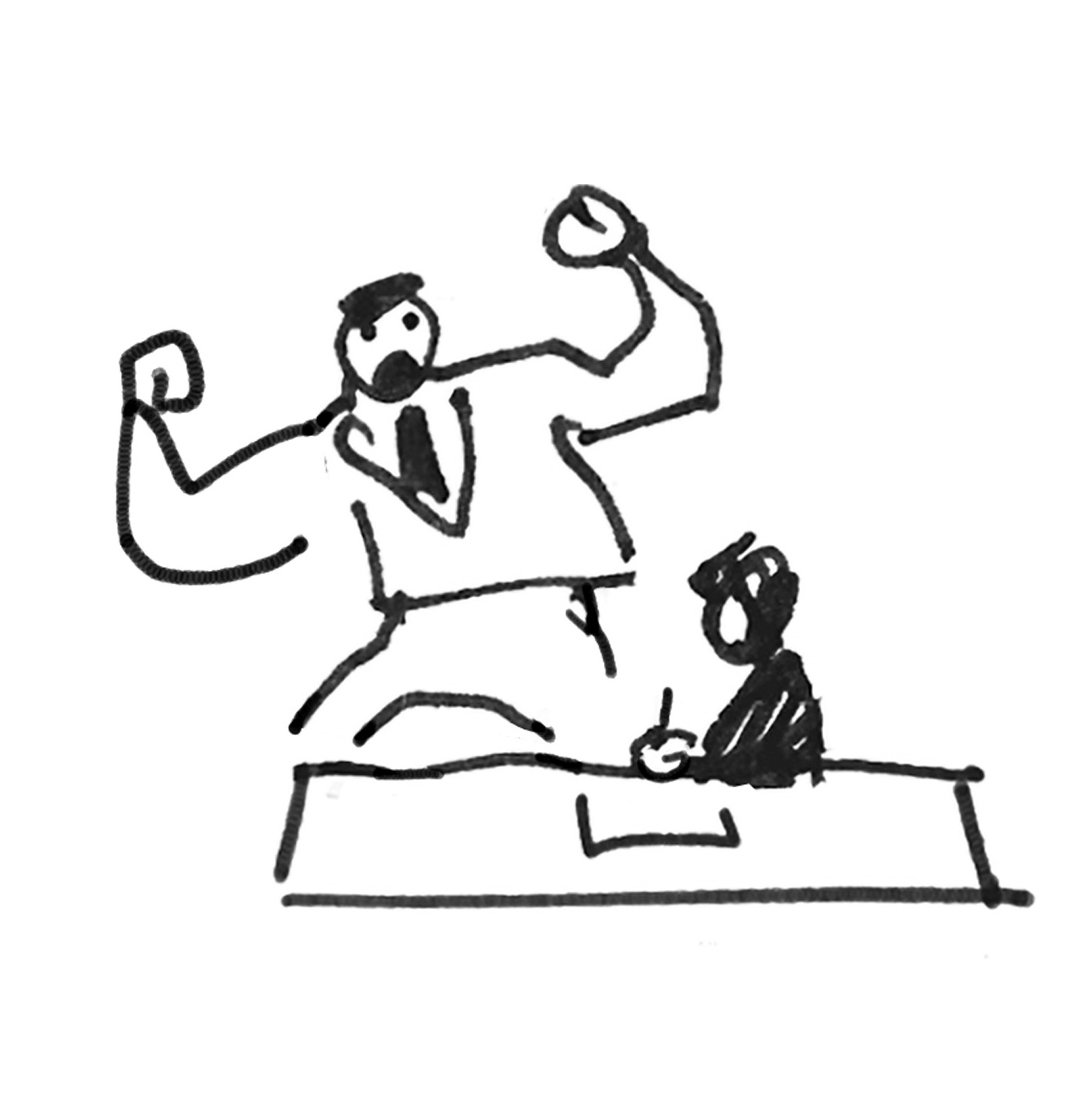
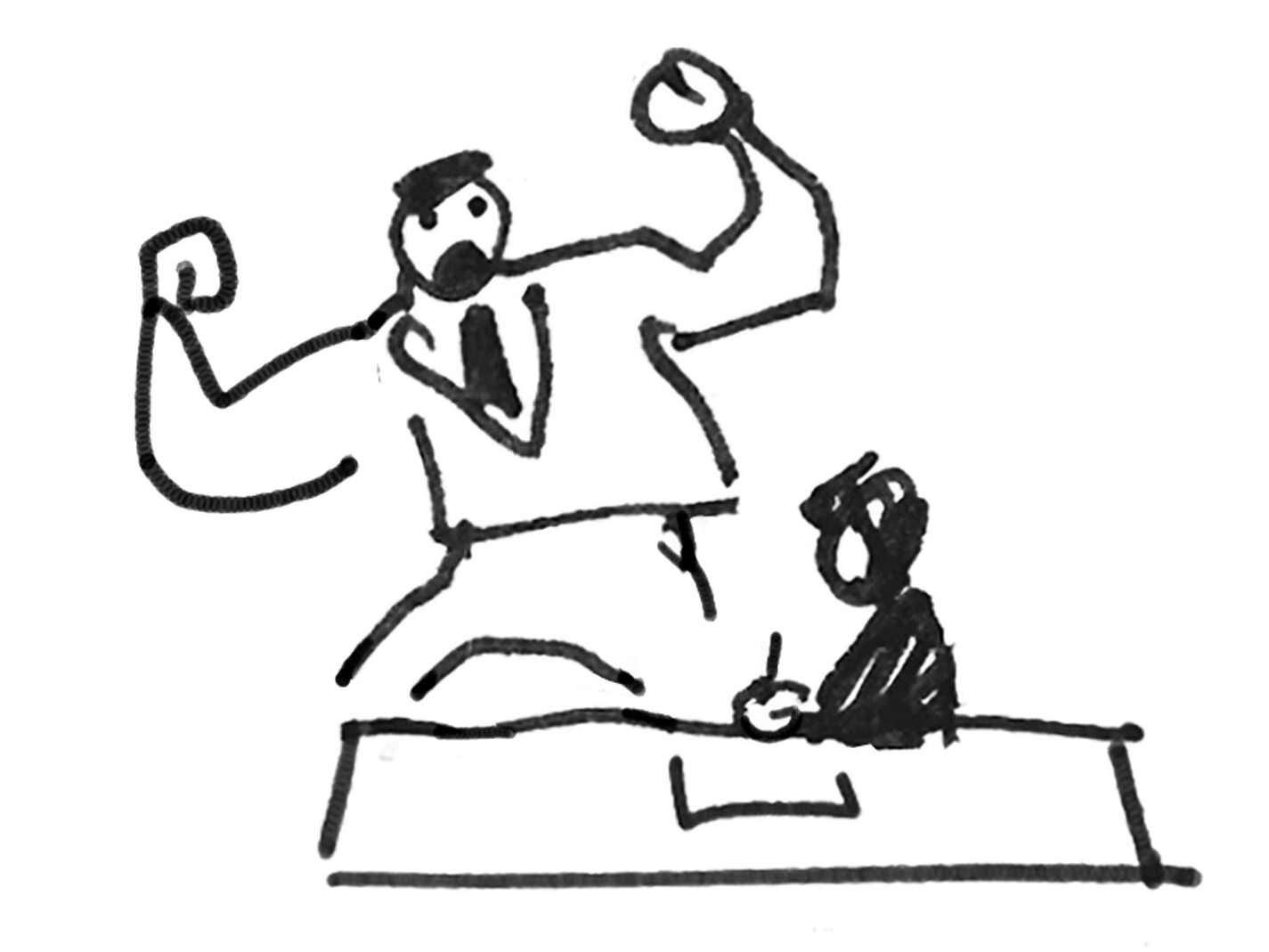
Then he paused, as if searching for the exact correct concept in the air above my desk. He flexed his arms and reached wide to channel the power of the heavens. “It needs BIG action!”
He jabbed his finger into my drawing. “This is small action,” he said. And then he turned and walked away.
At first, Big Action sounds like a call for simplistic aestheticized machismo. Humungous swords, pulsating muscles, euphoric explosions. A kind of middle-school Mountain Dew-induced power fantasy.
But over the years, the phrase has shown up unexpectedly—usually when I’m tempted to stop, and the work is defensible or close enough to call finished. In that moment, it keeps me honest by demanding one more turn.
In practice, it pressures you toward commitment. It’s walking the path and not looking back. It’s choosing loyalty the work above all else.
Big Action doesn’t just live inside a single painting—it can shape an entire experience. Sometimes it calls for maximalism, a roaring bonfire. Other times it calls for a single gesture—hot coals, steady heat. Or it might demand something else entirely.
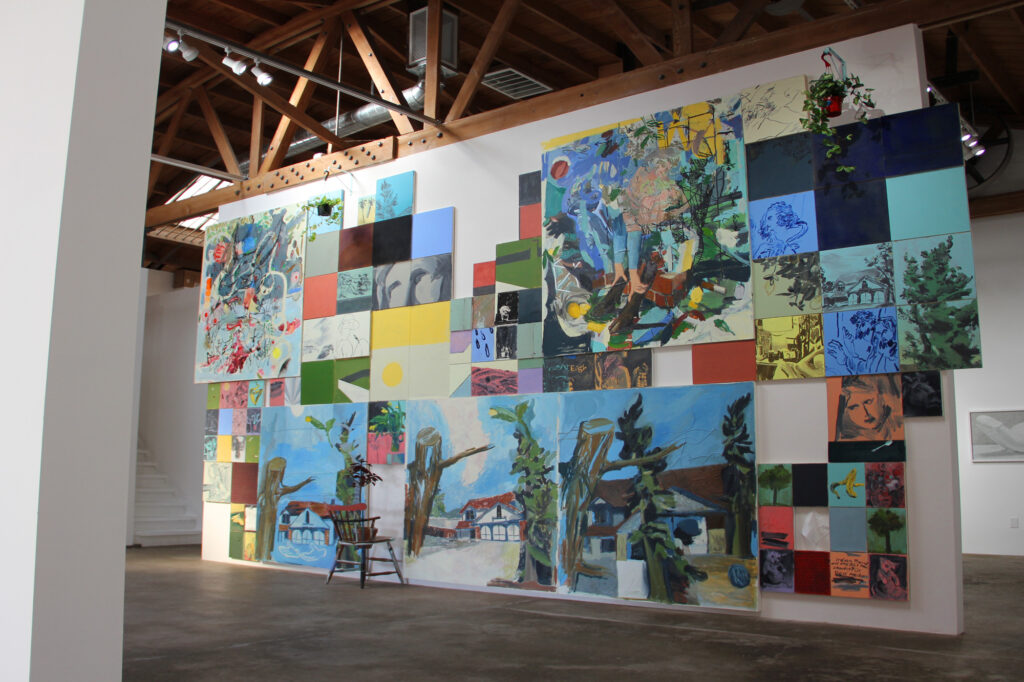
One of the clearest moments of Big Action in my own career was a solo show at DENK Gallery in Los Angeles. I’d been looking at a year’s worth of paintings in my studio—everything up on one wall—and I wanted to see what would happen if I treated it as a single work instead of a “salon style” hang.
So I wedged everything together until there were no gaps: paintings, diptychs, readymades, big messy narrative pieces, all compressed into one continuous image. I pitched it to the curator, built a mock-up, and got offered the show.
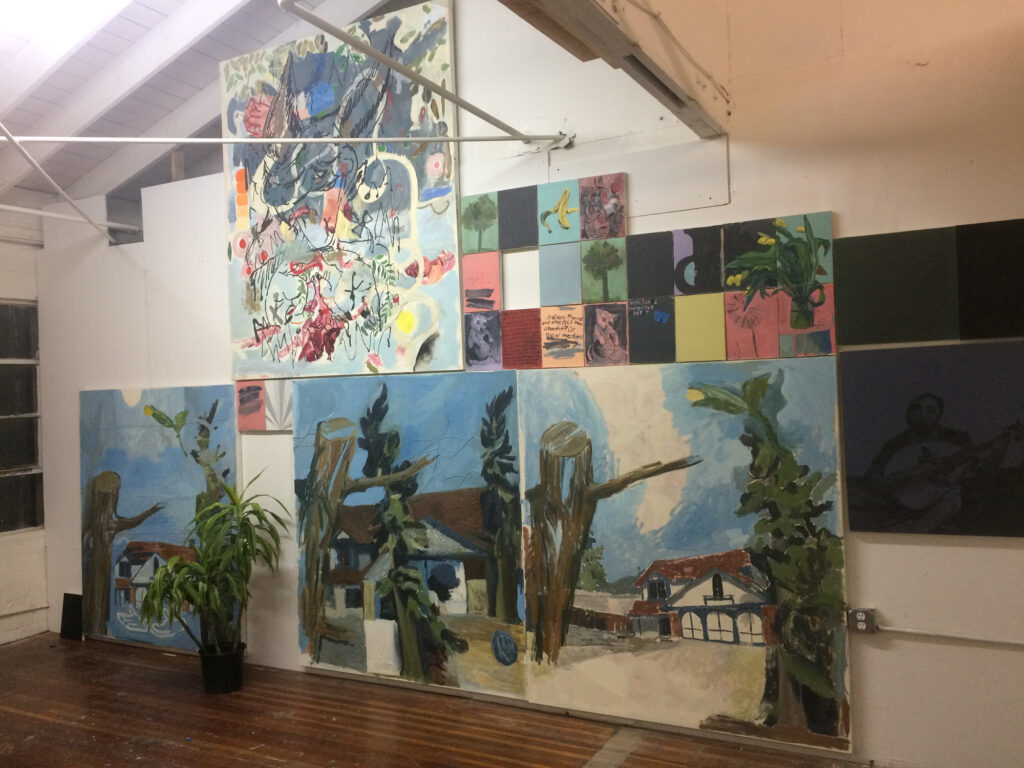
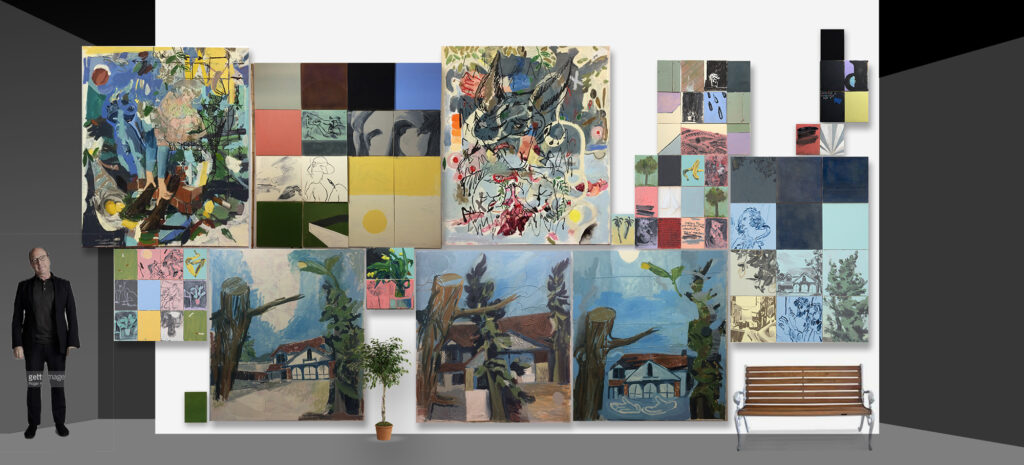
The gallery warned me it would be hard to sell work presented that way. And I’m still not sure it fully landed with my audience. But I chose risk. I chose Big Action over showing just another respectable installation—and I would have regretted not doing it.
It may have started as an annoying comment from a clownish boss, but Big Action has evolved into a reminder that taste, technique, and industry norms can dull your instincts without you noticing.
When I look back at my own work through this lens, I often feel a little disappointed. I don’t always measure up. But the best work I do embraces that energy.
Big Action looks like confidence, but it’s really a tool for self-honesty. It’s the voice that tells you you’re not done yet—that it can be better. And it tends to show up when you least want to hear it: only after the work has become defensible.
Did you take this as far as it could go, or did you stop when it became passable?
If there’s a flaw in Big Action, it’s that it doesn’t protect you. It doesn’t guarantee anything. If you’re doing it right, there’s a good chance it fails. Big Action increases the odds that you’ll embarrass yourself, confuse people, or make something that doesn’t land. It barricades the exits. It leaves you without an alibi.
And not everything needs that kind of escalation, anyway. There can be tremendous meaning—and beauty—in the quiet work of showing up with earnestness and humility.
That’s the real point. Big Action isn’t hustle culture. It isn’t a demand for bigger, louder, flashier work. It’s simply a refusal to default to what’s conventional.
The next time you’re working on a project, listen for the sound of your conscience. If it sounds like the crunch of an apple, it might be time for Big Action.
You’re not done yet.
Further reading:
As if becoming a parent wasn’t enough excitement, my solo show, Big House, opened on January 20th at Denk Gallery in the Downtown L.A. Arts District.
I was sitting across from B, a certain artist of great wisdom and wit, forking an omelette while engaging in every artist’s favorite pastime – talking shit, and complaining about gatekeepers.