On documenting and reproducing work after the fact
The art world moves slowly. Every once in a while someone will reach out with a question or an offer, and their point of reference will be years back. A show feels important while it’s up, but the months or years that follow unfold on a different timeline.
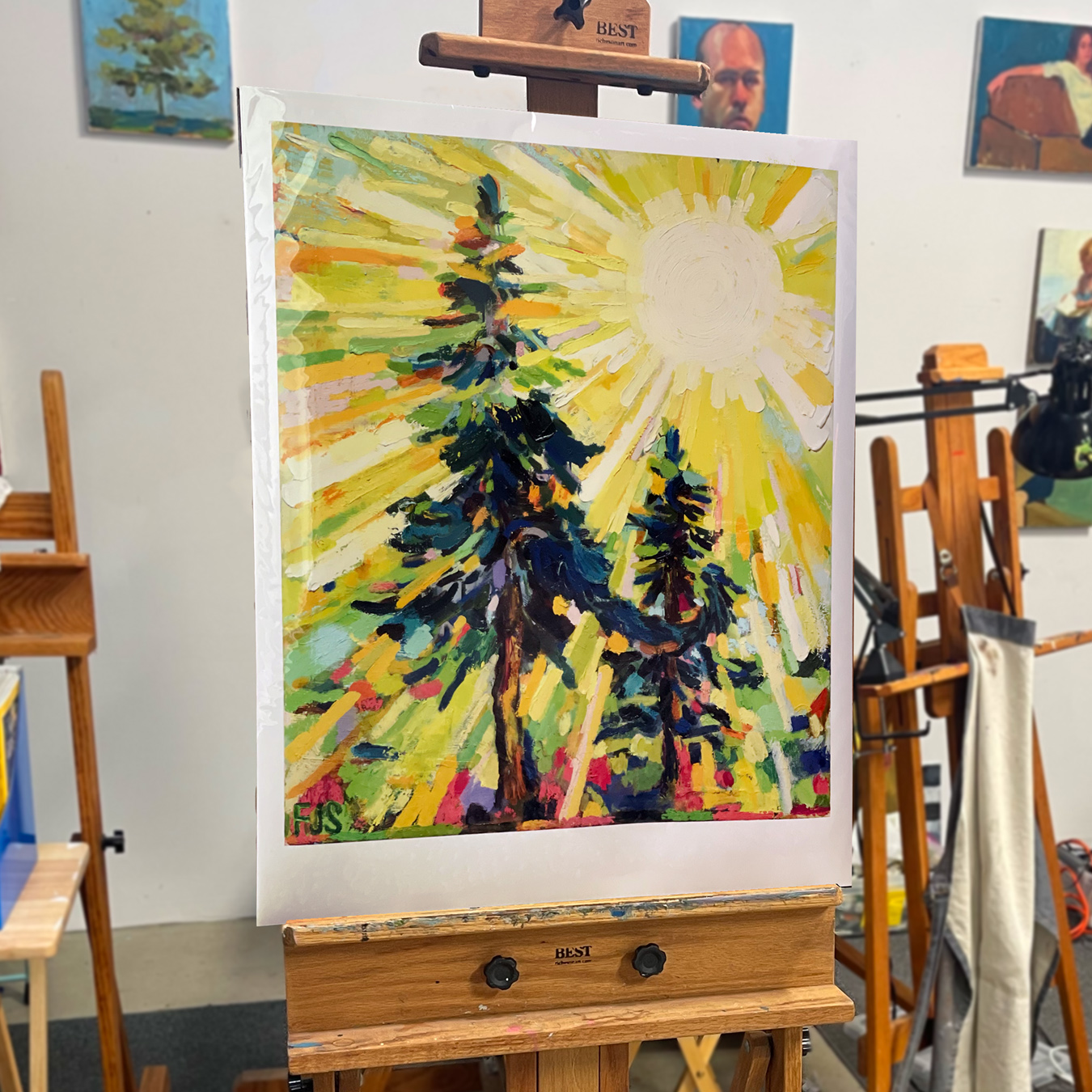
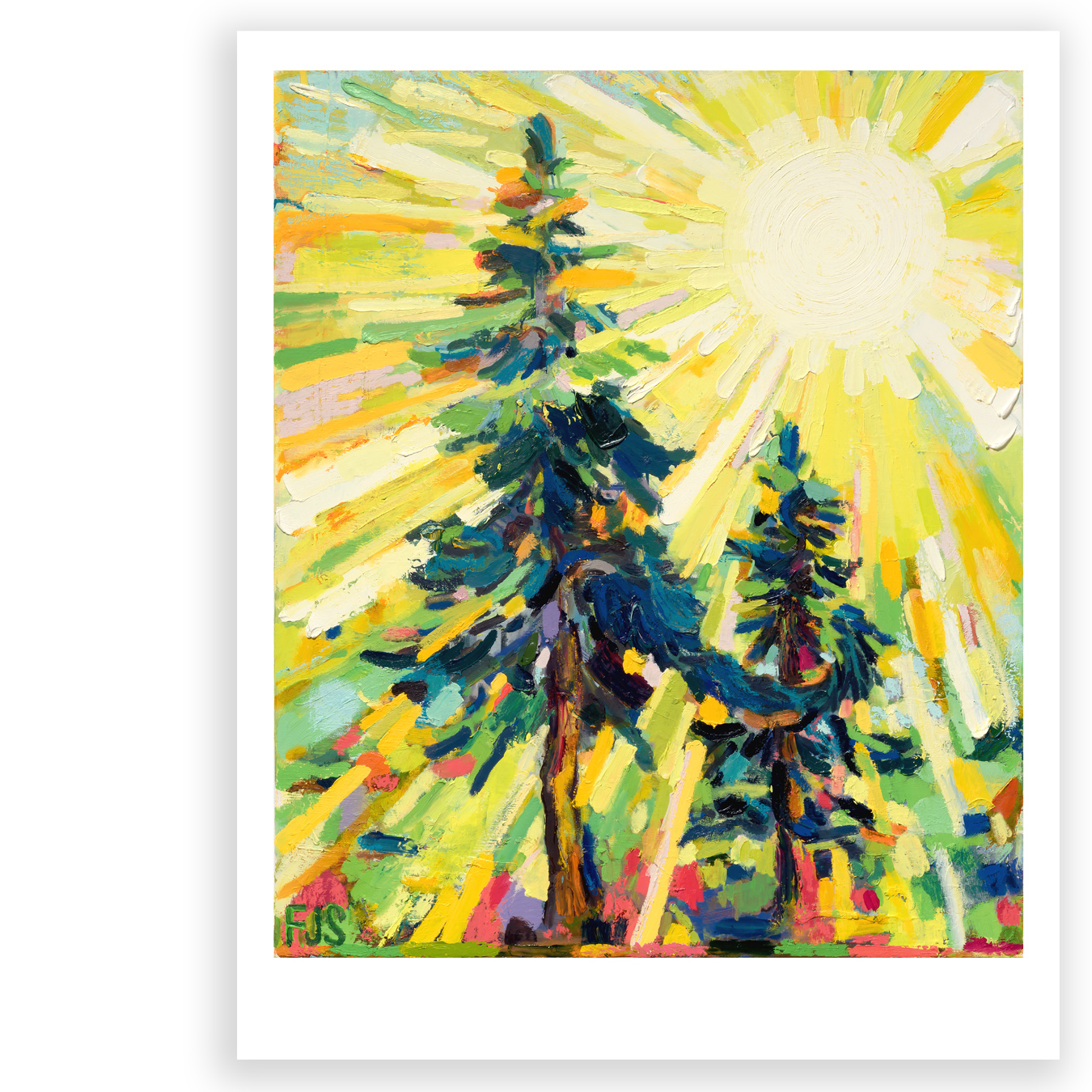
Last month I received an email out of the blue asking if my Two Trees painting was still available. Most likely a scam, or someone who wants to sell me SEO. I told him the painting wasn’t available. He asked if a print was possible. I quoted a price, and he paid.
Today the collector came by the studio. He told me over tea that he and his girlfriend saw my show last January and really liked the work. Many months later it came up in conversation again. They saw themselves in the Two Trees painting. He wanted to give her the print as a Valentine’s Day present. It turns out he was a real person after all.
I’m picky about who photographs my work. For this show I worked with my friend Alan Shaffer, who drove up from Los Angeles to shoot my exhibition at Axis Gallery last year. We both went to Art Center. He’s from a different generation and a different major, but we share a lot of overlapping connections from that school. Alan takes the best photographs, and he’ll tell you stories about just about everyone in the LA art world if you’re lucky enough to meet him.
Although he’s photographed many of my paintings, this was my first time using one of his images for a print rather than for a website or a catalog reproduction. The size was 22 × 30 inches—about as large as I could go without losing sharp details up close.
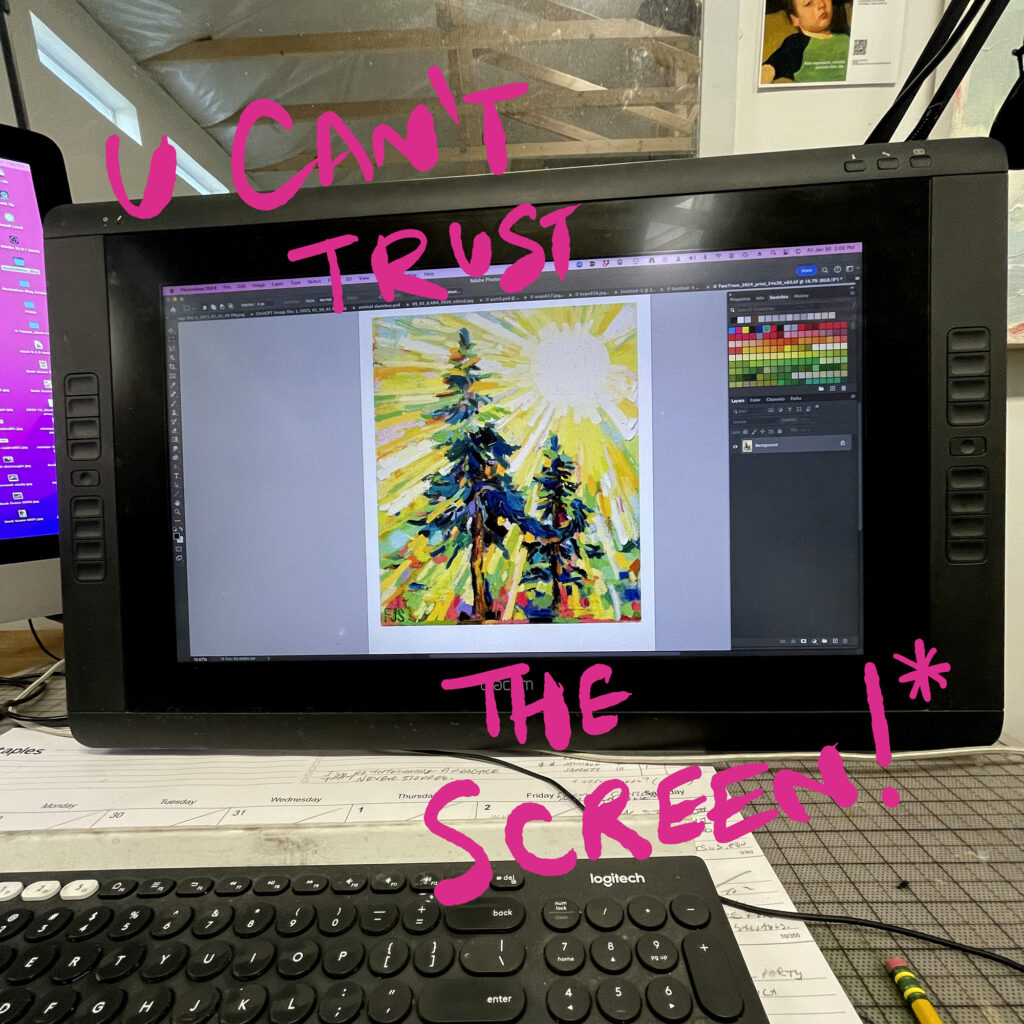
The next step was producing the print, which meant prepping the files and waiting on a first proof. It’s not fun to drive across town over and over to just look at proofs, but monitors tell lies. You can’t trust them.
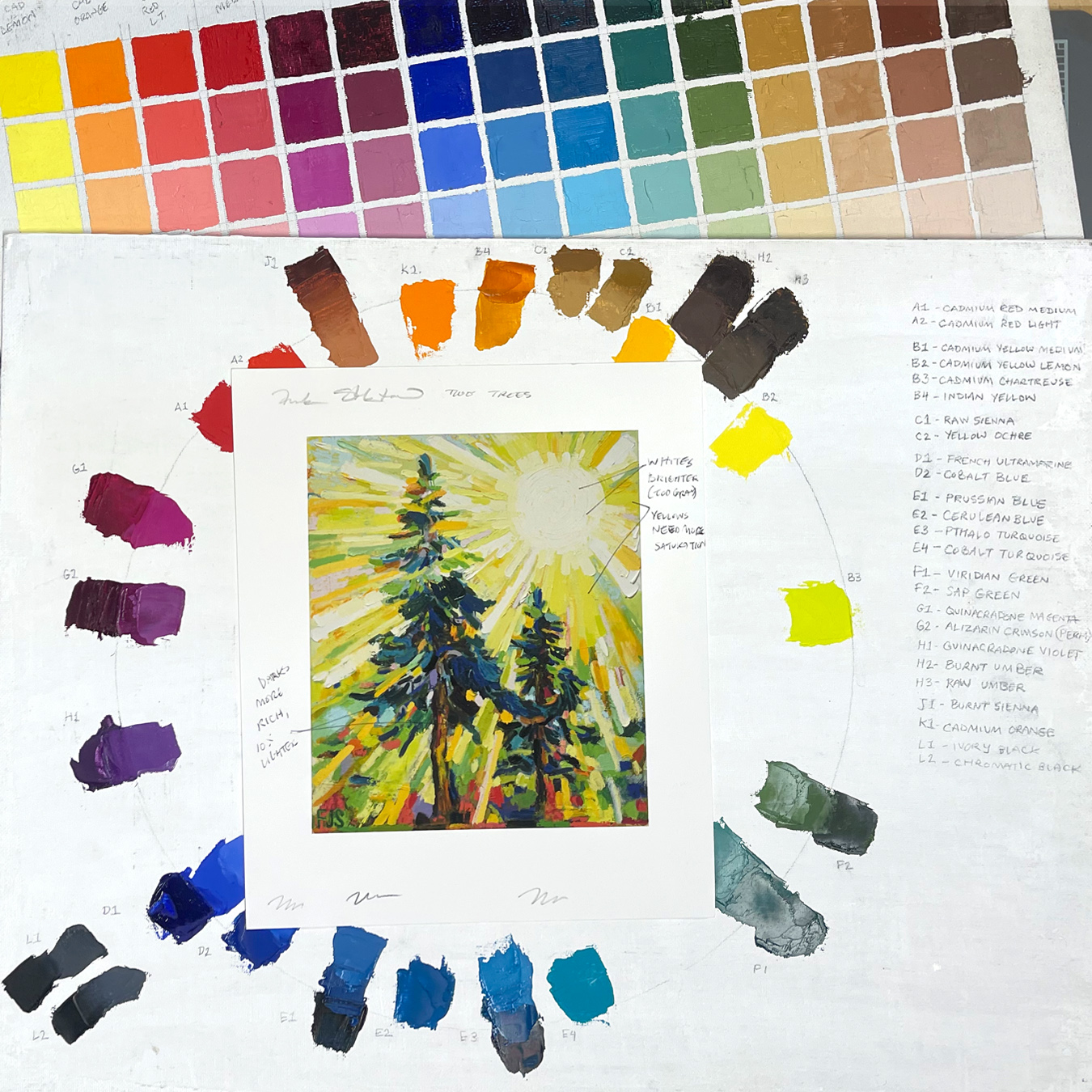
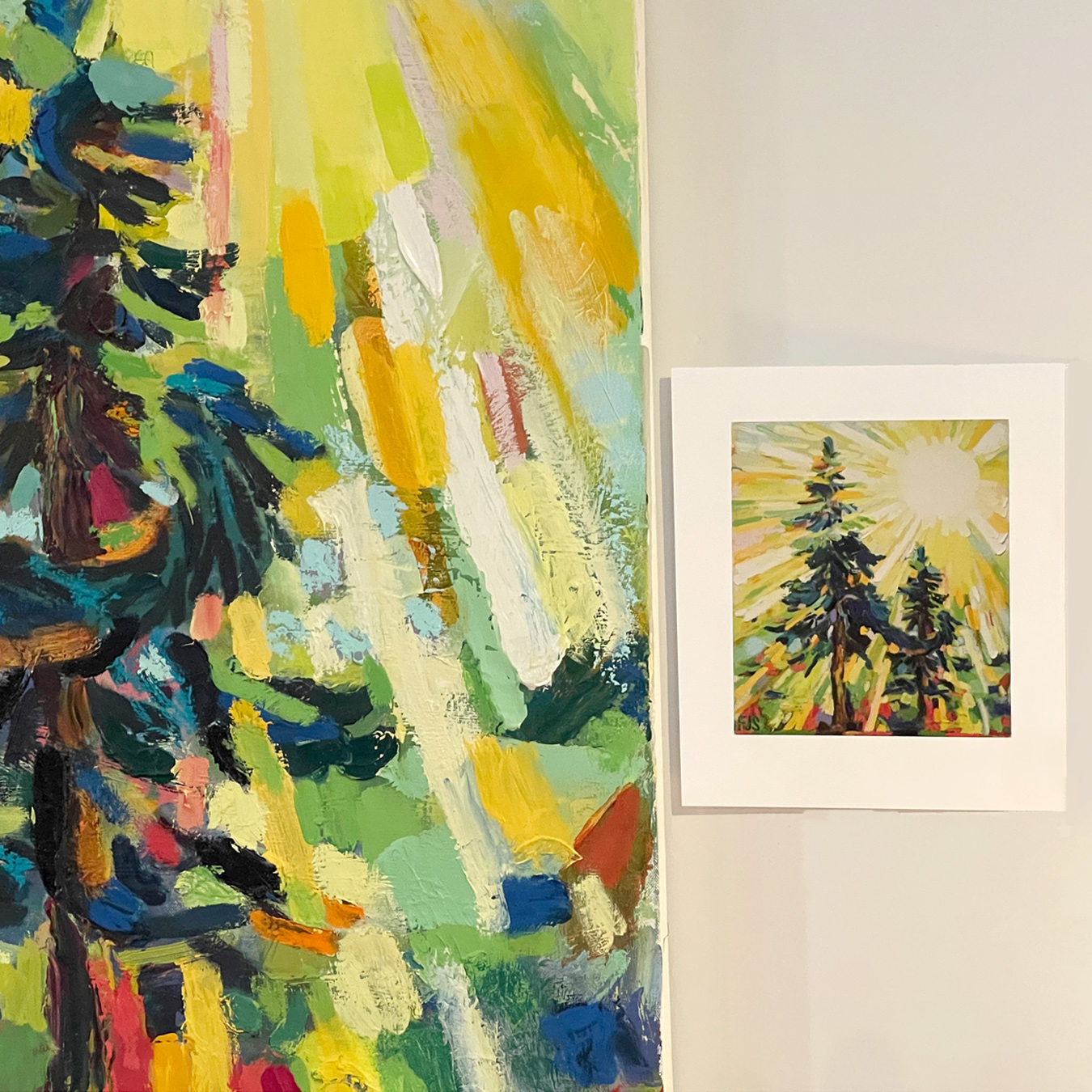
The first proof was close, but the color didn’t pop the way I wanted it to. Although the painting sold long ago, I keep pigment swatches from my palette on hand in the studio, which allowed me to compare the print colors directly to the pigments I’d used. I was also able to view the proof alongside the original painting and take notes. After some careful tweaks to the file, I sent it back for a second proof. This version had the chromatic “oomph” I was looking for, and I approved it for production.
One benefit of making a print is getting to see the work again with fresh eyes. When I received the final print, all of the rich detail and texture from Alan’s photograph were clearly visible, and the color matched my memory of the painting. The collector was pleased. I was too.
There’s a lot of background work that goes into reproduction—coordination, revisions, comparisons, decisions. Most people have no idea. The benefit is that if I make another print of this painting in the future, that groundwork is already in place. The painting is done but the print lives on.